Sunday, May 21, 2023

Housing the Homeless

Welcome to my first action project for my class, Policy, where we learned about the different bodies of government and how they can work with one another. This first unit being called, Legislate. We began with looking at the Civil Rights Act and the impact it still has on our country today. From there, we looked at dialectic's and created our own in class. From there we looked at checks and balances in the government and how each part of the government works with one another. We then looked at bills and the long journey that they go through to get signed into laws. Once understanding the process these bills go through, we created a timeline of the most known bills passed in our history. Our field experiences have led us to understand how to apply these bills on a larger scale.


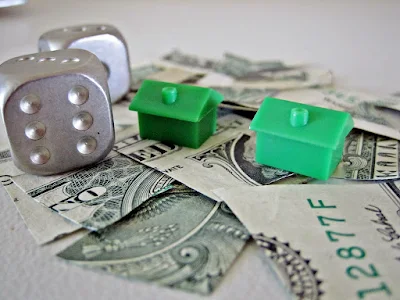
"Cut up Dollar Bill" by Images_of_Money is licensed under CC BY 2.0.


This action project involves  writing a letter to a person in governmental power to get a specific bill passed into law about an issue in our communities. I decided to tackle homelessness as my issue and write to senator Robert Peters to see if something could be done with the issue.


Here's my letter to Alder Robert Peter Below:

Dear Senator Peters,

Wall Street Chicago states that in January of 2022, 582,462 people experienced homelessness on a single night. Could you imagine being homeless on a winter night in Illinois? I live in Chicago and ever since I was young I've worried about homelessness as an issue. Currently I attend a school that has opened my mind up to the issues of the displacement of un-housed people in Illinois. Homelessness is an issue that still has a big impact on our state. Lack of housing could happen to someone because of the loss of a job, challenging health conditions, or a financial crisis. I am writing to ask you to support bill SB1376 because it will help to address the complex problem of homelessness in Illinois.

Housing Action Illinois states that about 10,431 people experience homelessness in the state. This means that a huge chunk of citizens are being forced out onto the streets without alternative shelter. WTTW states that nearly 40,000 Illinois public school students have gone through homelessness. Some students have been put into these positions because they don't get help from the government or other organizations. With this issue only getting worse, it makes me question who else might be next to be put on the streets because of a lack of support. Will it always be this way and is there anything that might aid a new beginning?

Housing Action Illinois states that 1 in 10 young adults ages 18-25, and at least 1 in 30 adolescents ages 13-17, experience some form of homelessness unaccompanied by a parent or guardian over the course of a year. This shows that not everyone has the same access to a home. It also illustrates how many young people are unhoused. Though it might seem daunting, there is a way to begin conversations to fix these issues.

The current bill, known as SB1376 or Housing Homeless-Vets and Families states, “In a provision listing certain factors a referring agency must consider prior to referring a homeless family with school age children to a shelter, requires the referring agency to also consider the military status of any member of the family to determine the family's eligibility for State or federal benefits and other supportive services for homeless veterans and their families, including, but not limited to, housing or rental assistance, job training, and employment opportunities.” It also requires an agency to consider if a family is or isn’t up for federal benefits from the government. If this gets signed, shelters will consider the placement of people throughout Illinois. This bill should be signed into law because it will give new opportunities to shelter the unhoused and have a direct impact on the lives of unhoused people

There may be backlash for passing this bill. Some people might say that putting this bill into law only affects the unhoused who are veterans or students. This would limit those who might not fall under those categories. However, this bill would be an important step towards solving the issue. Passing this bill could be an important way to pave a way to support the unhoused. There are bills like HB2831 which will provide a chair for community voices in what will happen with homelessness throughout the state. With bills like this in mind, it gives more reason why bill SB1376 should be signed into law because it will help even more of the homeless population.

This bill will help to begin to address one of the issues, because it will create more opportunities for homeless people to find open places. It will offer support for more of the people who are without shelter in our communities. In closing, I ask you to support bill SB1376 because it will help to address the complex problem of homelessness in Illinois. I hope you choose to push this bill to the forefront.


Sincerely,

Brooks Lansana


"Che Guevara, Graffiti, and Homeless Woman" by Franco Folini is licensed under CC BY-SA 2.0.


When writing this letter, I had to look deep into the issues of homelessness in Illinois and understand how I could speak to them. I did enjoy writing this out because it allowed me to express my opinions on an issue that has a direct impact on communities in Illinois and introducing a way to fix it. I did find it difficult to see who I should be writing this act to and what importance it would have in the long run. Once I did find that person, it did make it easier to write the letter above. If I were to do this project in a different way, I'd want to see how writing about a different bill could affect my response and what impact it would have.


Sources:


Cormier, R. (n.d.). Illinois bill to combat homelessness passes. Northern Star. https://northernstar.info/107035/news/illinois-homeless-bill-passed-in-both-houses/

Ending homelessness. Housing Action Illinois. (n.d.). https://housingactionil.org/what-we-do/advocacy/homelessness/#:~:text=Contributing%20factors%20range%20from%20a,the%20lack%20of%20a%20home

Illinois. National Alliance to End Homelessness. (2019a, August 15). https://endhomelessness.org/homelessness-in-america/homelessness-statistics/state-of-homelessness-report/illinois/

Illinois SB1376: 2023-2024: 103rd general assembly. LegiScan. (n.d.). https://legiscan.com/IL/text/SB1376/id/2804196

Illinois SB1376. TrackBill. (n.d.). https://trackbill.com/bill/illinois-senate-bill-1376-housing-homeless-vets-family/2355875/

New report finds at least 65,000 people experiencing homelessness in Chicago. WTTW News. (n.d.-a). https://news.wttw.com/2022/10/05/new-report-finds-least-65000-people-experiencing-homelessness-chicago

Stebbins, S. (2023, February 9). How Illinois’s homelessness problem compares to the nation. 247 Wall St. https://247wallst.com/state/how-illinoiss-homelessness-problem-compares-to-the-nation/?utm_source=patch-chicago%26utm_medium


Tuesday, May 16, 2023

Superb and Sustainable Circuits

This is the second unit for my class Urban Planning. The unit itself was titled Power. Throughout it, we’ve researched the purpose and history of circuits. Not only that, but we researched why electricity is important and how we can implement it into our daily lives. We also looked into the war of currents and how it still affects us to this day. The war of currents was an electrical battle between Nikola Tesla with AC currents and Thomas Edison with DC to figure out which current would be used in the world's fair in the upcoming years. AC currents goes in multiple directions while DC only goes in a single direction. We had some guests from ARUP which is a global design firm that works throughout Chicago to provide places for engineers to work and fix environmental issues related to electricity. With these concepts in mind, the goal of this action project is to create a circuit of our own to display how sustainable certain appliances can be in comparison to others. Not only this, but understanding why they are important to us.

I also worked with my partner KJ on this project so here's a link to his blog if you'd like to see his side of this project:

KJ's Blog


To make our circuit, it took a lot of trial and error. At many points, there were only certain parts of our circuit that worked or didn't, making it complicated for each part of our circuit to work in tandem with one another. We began by building a single simple circuit with extra parts attached to it. From there, we shifted to have a series circuit with a parallel circuit flowing outside of it. The switch close to the battery allows all the lights to turn on. While the switch at the back of our circuit allows the fan to be turned on and off.


Here's a slideshow of the process of building our circuit that shows what a sustainable kitchen might look like. This also shows how our circuit might flow in a kitchen that uses sustainable appliances. Here are the other steps we took to create it:


Here's an explanation for each appliance we looked at:


The S2 button switch serves the purpose of turning on all of the main appliances in our kitchen.

The R2 resistor serves as the Maxi-Matic Elite Compact Air Fryer. This air fryer only uses 700 watts per day. This makes it serve as an option to make food in a sustainable way. In comparison to stove tops or air fryers that both use 1500 watts a day.

Our D1 LED serves as the VICNIE LED Flush Mount Ceiling Light. This light only uses 20 watts in a single day allowing for light in the kitchen at a lower wattage. In comparison, the average ceiling light uses 60 watts which is a huge difference in energy.

The L2 light bulb serves as the Costway 24in” single wall oven. With only 2,300 watts in a day, it’s more eco-friendly than other ovens on the market. Most other ovens use 2,000 - 5,000 watts in a day so the oven we’ve chosen is on the lower end of the wattage

The D2 LED serves as the BLACK+DECKER EM720CB7 Digital Microwave Oven using only 700 watts per day. The average microwave uses 900-1,000 watts in a day. When comparing to our microwave there's at least a 200 watt difference which is a lot of energy saved.

Finally the motor being the Briiv Air Filter which is built from 90% renewable materials. Not only this, but it’s extremely durable making it more sustainable than most other air filters and only using 120 watts. The average filter uses 8-56 kwh in a day. Though it uses more than the average appliance, it makes up for it in how renewable it is.


Our design applies to SDG 7.2 which is to increase substantially the share of more eco friendly in the global mix. This is because each appliance we’ve chosen is more eco-friendly than the average version of it. This shows that our kitchen is one of the first to implement so many renewable appliances in different ways. When moving to create a more healthy environment, we should be using these types of appliances along with the new ideas engineers are creating daily.


This project was eye opening for me because it allowed me to see how we use power in different ways. Doing the hands on circuit building was a challenge and my partner KJ and I took 2 days to complete a final circuit. With trial and error, we did eventually complete the circuit. The part that I enjoyed the most was looking at energy efficient appliances that some people use daily. There are also a lot of different companies that are prioritizing being eco-friendly so it is interesting to see how they’ve taken action. If I were to do this project again, I’d want to try building a circuit with a more linear design and seeing how that might affect our design.


Sources:

Briiv Air Filter. Briiv. (n.d.). https://www.briiv.co.uk/products/briiv

Expert advice on improving your home. Today’s Homeowner. (2023, May 4). https://todayshomeowner.com/

Gerhardt, N. (2023, May 9). Energy efficient and eco-friendly appliances for your home. Family Handyman. https://www.familyhandyman.com/list/most-efficient-appliances/

Oz, & Joy. (2023, March 15). 8 eco-friendly appliances to sustainably cook, cool, & clean. Sustainable Jungle. https://www.sustainablejungle.com/sustainable-tech/eco-friendly-appliances/

United Nations. (n.d.). Goal 7 | Department of Economic and Social Affairs. United Nations. https://sdgs.un.org/goals/goal7

Thursday, May 11, 2023

The Power of Calculus

This is my first action project for my workshop, Intro to Calculus. So far, we've gone over how calculus can be used and why these equations are important. We saw this by looking at jobs like being a engineer, a mathematician, or an animator. Throughout the class we have gotten a simple idea of the fundamental parts of calculus and how we can use them in the future. Some of the main things we learned were slopes, tangent lines, and the power rule. We also looked at the instantaneous slope to understand how a slope might change overtime. The biggest part of this unit were derivatives. Derivatives themselves, are similar to understanding electricity and how these concepts can work in tangent to find certain answers. For this action project, the purpose was to analyze an equation of our choice and understand how to use the concepts we've learned to understand it. 

Here's my slideshow below:


Throughout this project, I often struggled with applying certain concepts like derivatives, and the power rule into this project. Even though that's true, I did manage to get through it by going through step by step and making sure I checked every box. My teacher was also very understanding and helped me to apply each equation into my project. If I were to do this again I'd want to see how doing another equation might affect my process and how I could change my approach.  

Sunday, April 23, 2023

Bending and Breaking Popsicle Sticks

This is my first action project for my class, Urban Planning. The title of this unit was called Load, where we learned about Newton's laws of motion. Each law of motion has different correlations to how architects build certain areas. We saw this by looking at the 7 ancient wonders of the world and understanding why the pyramids are the only ones still standing. From there, we looked at bridges, and how certain bridges can be used in different circumstances. This led us to have a field experience with Mark Bennett who is an urban planner to get direct information for how our information can be applied to certain structures. For this action project, the purpose was to build a bridge of our own out of popsicle sticks.

"Former Santa Fe Railroad Through Truss Bridge over Trinity River on Santa Fe Trestle Trail, Dallas, Texas 1306141015BW" by Patrick Feller is licensed under CC BY 2.0.


For this project I collaborated with LH. Our bridge takes inspiration from a Truss Bridge. We chose this design, because it would spread the weight out equally. Specifically, a Pratt truss allows for tension and compression to work the most effectively while having weight move on it. 


Here's his blog below if you'd like another perspective on this project:


LH's Blog Post


Here's a sketch of our bridge where 1 inch on the sketch is equal to 6 inches in real life:

"Bridge Sketch", By LH, 2023


Along with a digital sketch of our design:


“Digital Bridge Sketch”, By LH, 2023


The SDG that our bridge connects with most is 11.2. SDG 11.2 is to provide access to safe, affordable, accessible and sustainable transport systems in the world. Not only this but to improve road safety, notably by expanding public transport, while keeping in mind who's being affected. Bridges in themselves allow for an extra option for transportation besides walking and biking  in and out of cities. Driving is a popular way for a lot of people to get around. The more bridges there are, it can allow for easy travel.


After building our bridge, here's a diagram that shows each part of it:

"Bridge Diagram", By RBL, 2023


Here are the calculations for our bridge:


"Calculations", By RBL and LH, 2023


The bridge itself also shows the law of conservation of energy. This means that no energy can be created or destroyed, but only converted to one form to another. For our bridge, it's form of energy is converted from potential to kinetic given certain circumstances. When bridges fall apart, it shows the conversion from potential to kinetic through how they work.


Here's our bridge in action:


"Bridge Test", LH, 2023


In conclusion, I enjoyed working on this action project because I've already had past experiences with making bridges with popsicle sticks. The main thing we wanted to hit with our design was making sure that we had the longest bridge that could hold ten pounds. Because of this, we needed to prioritize having a long bridge with solid trusses that can hold weight equally across it. In some cases, it made it more difficult to have supporting points on each side because it led to one side falling over when testing. We also needed to understand how to work efficiently with our limited number of 75 popsicle sticks. This made it difficult for us to weigh our tests while having a long bridge. We overcame some of these things by cutting our popsicle sticks in half and giving them a bigger portion. From this project, I learned that if we had a slightly shorter bridge with more support spread out it would've been more effective. If I were to do this again, I might want to see how doing a different type of truss might affect how the weight shifts.

  • United Nations. (n.d.). Goal 11 | Department of Economic and Social Affairs. United Nations. Retrieved April 23, 2023, from https://sdgs.un.org/goals/goal11

Analysis of a War about Nazis and how we fit in

This is my final action project for my class, Policy and for my junior year. This unit was split into two unit those being Execute and Judge...